Long before Christopher Columbus ever set eyes on the shores of Hispaniola in December 1492, the island already had a name. The Taíno people — its original inhabitants — called it Ayiti, meaning “land of high mountains.” Centuries later, when formerly enslaved Africans declared their independence in 1804, they reached back past colonialism and reclaimed that ancient name. The very word Haiti is a Taíno word, a testament to a people who were nearly erased from history but whose spirit, language, and culture refused to disappear entirely.
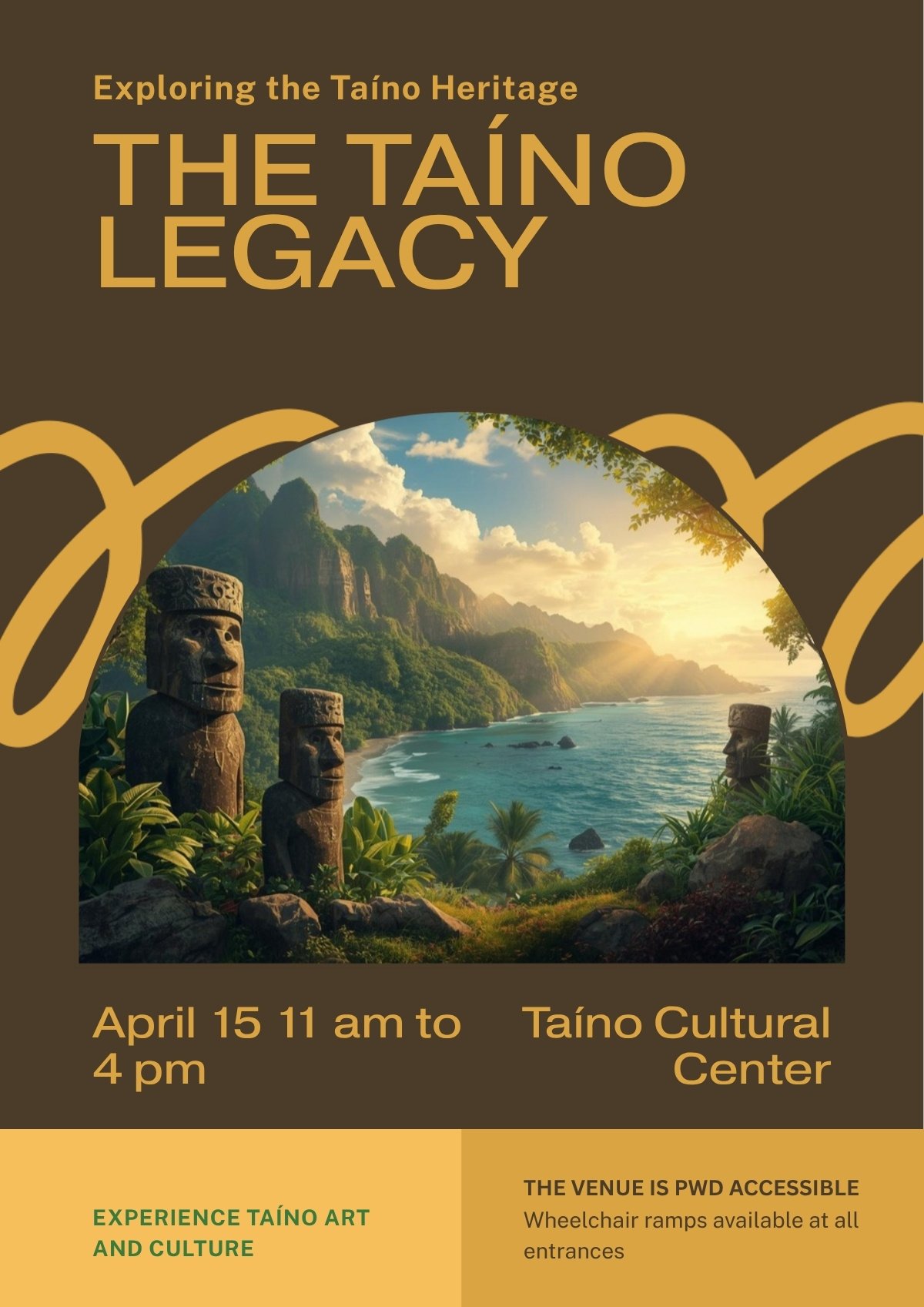
A Civilization Born of the Sea
The Taíno were descendants of Arawakan-speaking peoples who originated in the Orinoco River Delta of present-day Venezuela. Beginning around 400 B.C., they embarked on an extraordinary maritime migration, island-hopping northward through the Lesser Antilles before settling across the Greater Antilles — Cuba, Jamaica, Puerto Rico, and Hispaniola. By the time Europeans arrived, the Taíno had become the most numerous Indigenous people of the Caribbean, with population estimates for Hispaniola alone ranging from several hundred thousand to over a million.
These were not scattered bands of hunter-gatherers. The Taíno built one of the most densely settled and complex pre-state societies in the Americas. Their villages, called yucayeques, radiated outward from central plazas where ceremonies, festivals, and the beloved ball game — played on rectangular courts with a rubber ball — brought communities together. The largest settlements in Hispaniola housed thousands of people in sturdy wooden homes called bohíos, thatched with palm leaves and designed to withstand the Caribbean’s fierce storms.
p>Long before Christopher Columbus ever set eyes on the shores of Hispaniola in December 1492, the island already had a name. The Taíno people — its original inhabitants — called it Ayiti, meaning “land of high mountains.” Centuries later, when formerly enslaved Africans declared their independence in 1804, they reached back past colonialism and reclaimed that ancient name. The very word Haiti is a Taíno word, a testament to a people who were nearly erased from history but whose spirit, language, and culture refused to disappear entirely.
A Civilization Born of the Sea
The Taíno were descendants of Arawakan-speaking peoples who originated in the Orinoco River Delta of present-day Venezuela. Beginning around 400 B.C., they embarked on an extraordinary maritime migration, island-hopping northward through the Lesser Antilles before settling across the Greater Antilles. By the time Europeans arrived, the Taíno had become the most numerous Indigenous people of the Caribbean, with population estimates for Hispaniola alone ranging from several hundred thousand to over a million.
These were not scattered bands of hunter-gatherers. The Taíno built one of the most densely settled and complex pre-state societies in the Americas. Their villages, called yucayeques, radiated outward from central plazas where ceremonies, festivals, and the beloved ball game brought communities together. The largest settlements in Hispaniola housed thousands of people in sturdy wooden homes called bohíos, thatched with palm leaves and designed to withstand the Caribbean’s fierce storms.
p>Five Kingdoms, One Island
Taíno society on Hispaniola was organized into five great chiefdoms, or cacicazgos, each ruled by a hereditary chief called a cacique. In the northwest was Marién, governed by Cacique Guacanagarí — the leader who would famously welcome Columbus and offer him hospitality after the Santa María ran aground on Christmas Day, 1492. The other chiefdoms — Maguá, Maguana, Jaragua, and Higüey — stretched across the island, each with its own character and alliances.
p>The social hierarchy was carefully defined. Below the cacique stood the nitaínos, a class of nobles and sub-chiefs. The bohíques served as shamans and healers, mediating between the physical and spiritual worlds. The naborías were commoners who worked the land. Power was inherited through matrilineal lines — a system that gave Taíno women a significance often overlooked in colonial accounts.
p>Zemís, Spirits, and the Sacred World
At the heart of Taíno spiritual life were the zemís — carved representations of deities and ancestral spirits crafted from stone, wood, shell, bone, and cotton. The Taíno believed zemís possessed supernatural power and served as intermediaries between humans and the divine. The supreme deity was Yúcahu, lord of cassava and the sea. His mother, Atabey, was the goddess of freshwater and human fertility — a reminder that in Taíno cosmology, creation itself was feminine.
p>The bohíques led elaborate ceremonies called cohobas, during which participants inhaled a hallucinogenic powder to communicate with the spirit world. The sacred caves of Hispaniola, including the famous Caves of Pomier near San Cristóbal, still bear carbon drawings where Taíno artists depicted their cosmology on stone walls that have endured for centuries.
p>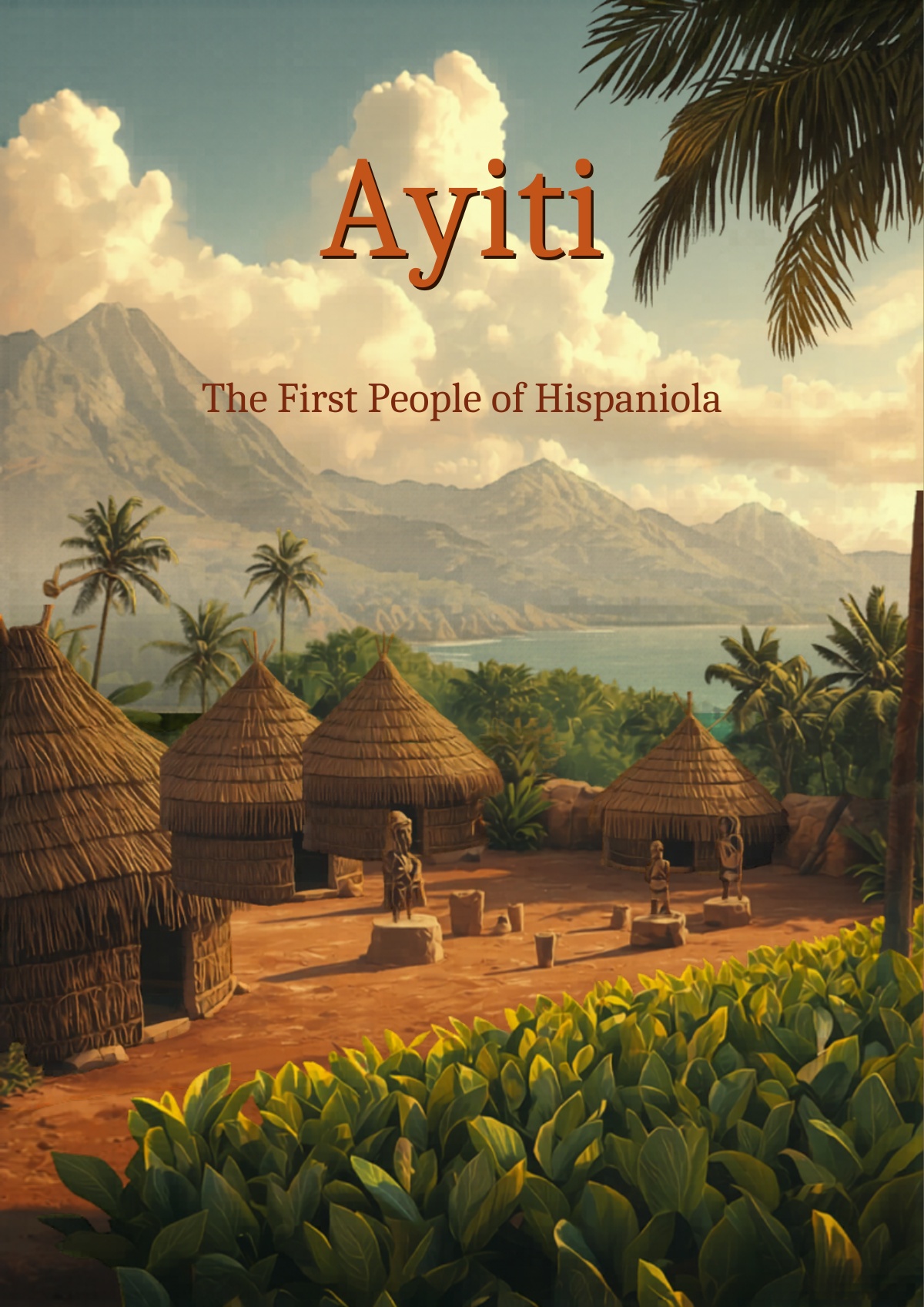
Farmers, Navigators, and Inventors
The Words We Still Speak
If you have ever paddled a canoe, slept in a hammock, weathered a hurricane, enjoyed a barbecue, or smoked tobacco, you have spoken Taíno words.
p>In Haitian Kreyòl, the Taíno presence runs even deeper. The word kasav echoes directly from Taíno kitchens. Manba, the Kreyòl word for peanut butter, has Taíno origins. And the very name of the nation, Ayiti, is the most powerful inheritance of all.
p>Erasure, Survival, and Rediscovery
The arrival of Columbus set in motion one of history’s most devastating encounters. Within decades, the Taíno population collapsed — ravaged by European diseases, decimated by forced labor, and shattered by violence. By 1550, the Taíno were considered virtually extinct.
But recent genetic studies reveal Taíno DNA in modern Caribbean populations. The Taíno did not vanish — they intermarried with enslaved Africans and European settlers, weaving their inheritance into a new society. Their agricultural techniques persisted. Their words endured.
When Haitians chose the name Ayiti in 1804, they were reaching back across three centuries to honor the first people who loved this land. At HaitiPAM, we believe understanding Haiti means beginning here — with the people who first called these mountains home.
p>
 HAITI PAM
Leave a comment