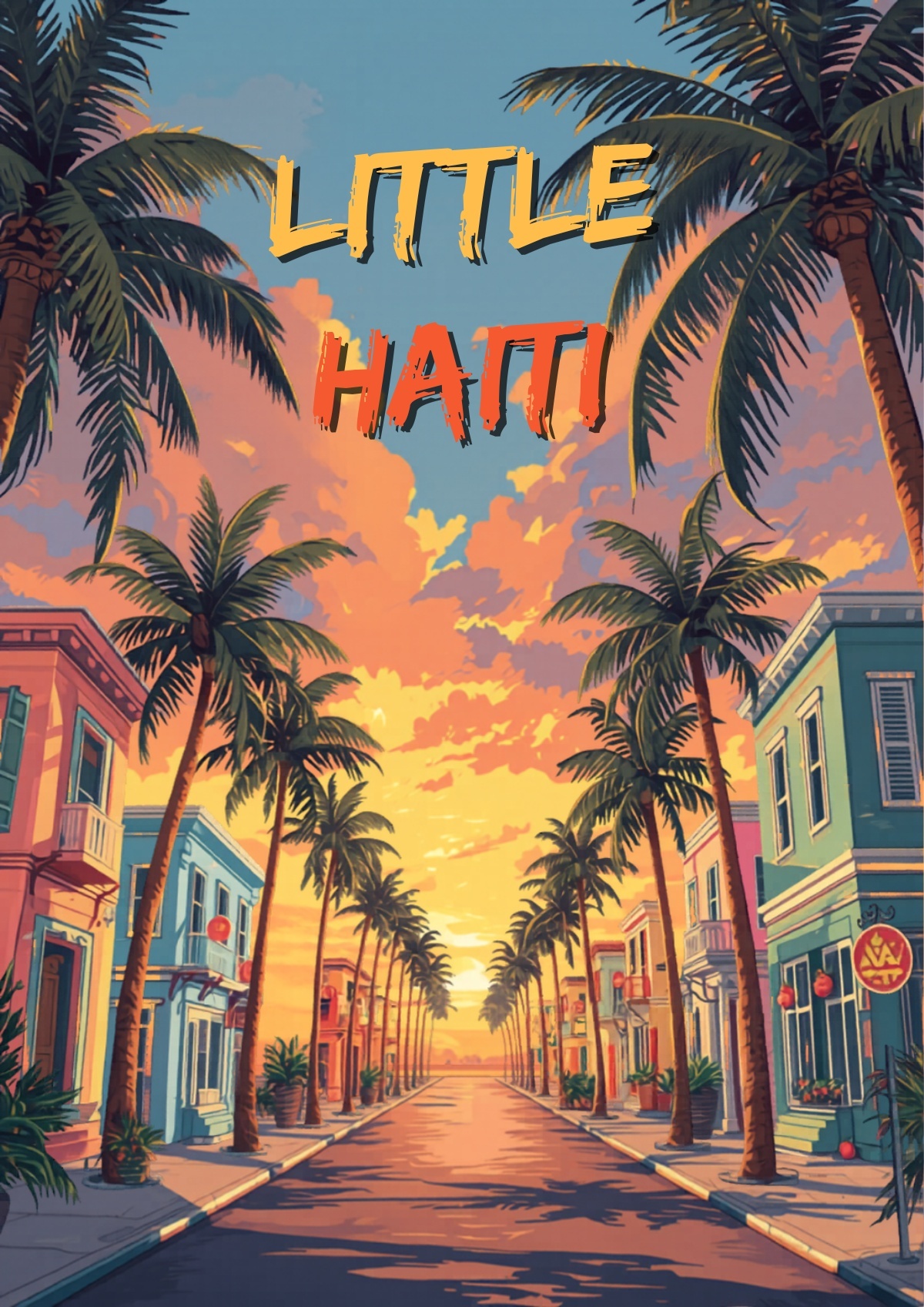
Walk north along Northeast 2nd Avenue in Miami and the city transforms before your eyes. The glass towers and tourist beaches give way to pastel-painted storefronts, the aroma of griot and djon djon rice drifting from kitchen windows, and the unmistakable rhythm of Kreyòl filling the air. Welcome to Little Haiti — a neighborhood built by refugees, sustained by resilience, and alive with the spirit of a people who carried their homeland across the sea.
From Ayiti to Miami: how a neighborhood was born
In the 1970s and 1980s, thousands of Haitians fled the brutal dictatorships of François “Papa Doc” and Jean-Claude “Baby Doc” Duvalier. Many arrived on the coast of South Florida in small, overcrowded sailboats — the “boat people” whose courage became legendary. They settled in the Edison and Little River sections of Miami, one of the city’s oldest neighborhoods, and began transforming it block by block.
The name “Little Haiti” itself was the vision of Viter Just, an activist and entrepreneur who had been arrested in Haiti for supporting democracy. After arriving in Miami in the 1970s, he proposed calling the area “Little Port-au-Prince.” When the Miami Herald published his letter, the editor used the headline “Little Haiti” — and the name stuck. What had been a neglected stretch of Miami became the largest and most vibrant Haitian community in the United States.
A living open-air museum
Little Haiti is not simply a place where Haitians live. It is a place where Haiti lives. The streets themselves tell the story. On NE 54th Street, vivid murals by artist Serge Toussaint chronicle the Haitian experience since 1980 — revolutionary heroes, musicians, market scenes, and the long journey across the water. These are not decorations. They are a visual archive of a community’s memory, painted on the walls for everyone to see.
At the corner of North Miami Avenue and 62nd Street stands a 13-foot bronze statue of General Toussaint Louverture, the father of the Haitian Revolution. It is a reminder that this community descends from people who overthrew the most powerful colonial empire on earth — and that pride runs deep in every block of Little Haiti.
The Caribbean Marketplace and cultural anchors
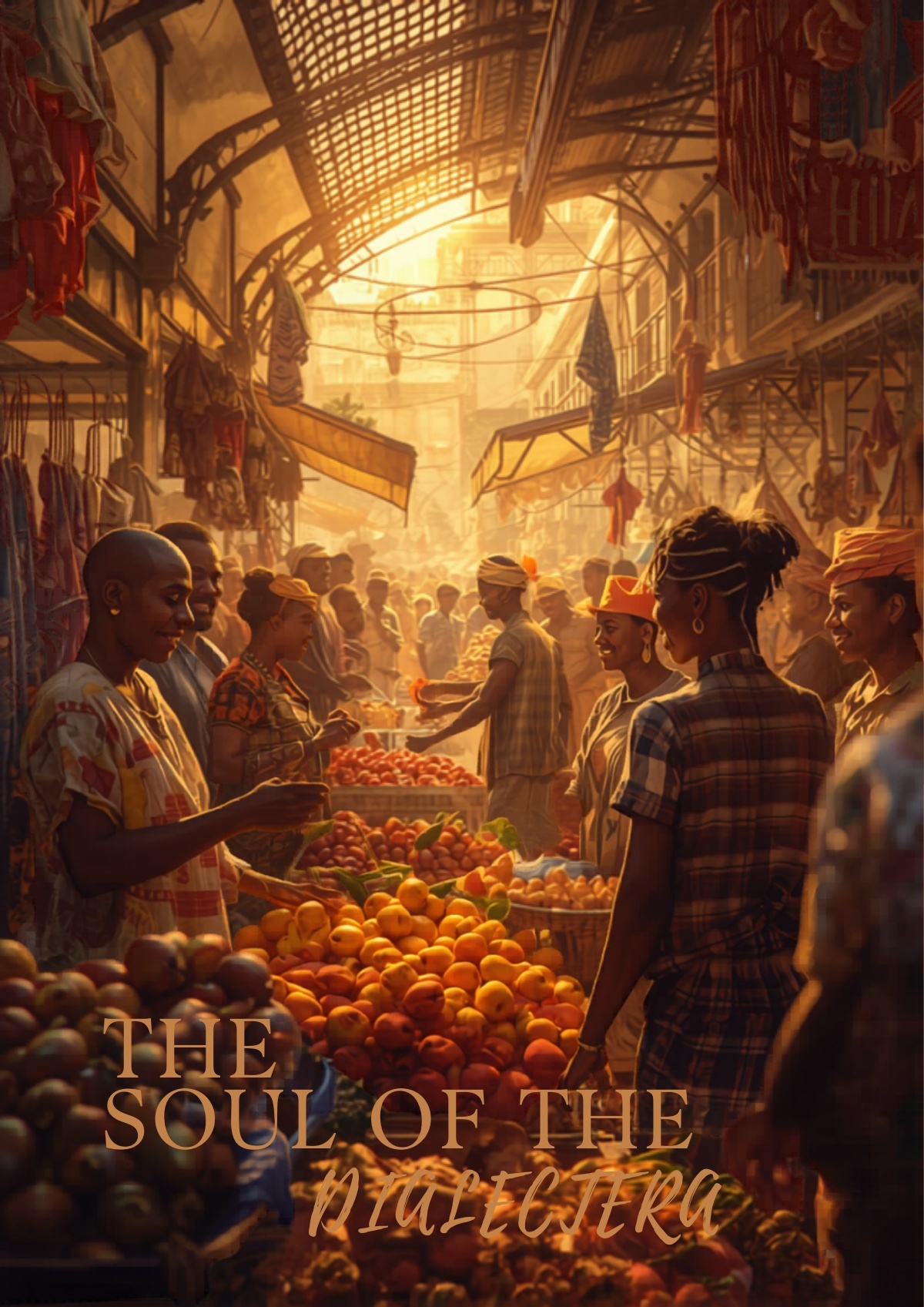
At the heart of the neighborhood sits the Caribbean Marketplace, a 9,000-square-foot structure modeled after the famous Iron Market in Port-au-Prince. Every Saturday it transforms into a celebration of Haitian life — food vendors serving authentic cuisine, artisans displaying handmade crafts, and the sounds of kompa and rara echoing through the open-air halls. It is the kind of place where you can buy a plate of tassot with bannann peze and leave with a hand-carved wooden sculpture and a bottle of Barbancourt rum.
The Little Haiti Cultural Complex, dedicated to preserving Afro-Caribbean culture, draws over 100,000 visitors each year with its art gallery, dance studios, theater performances, and community festivals. Nearby, Libreri Mapou — part bookstore, part cultural center — carries works by Haitian authors in Kreyòl, French, and English, keeping the literary traditions of Haiti alive thousands of miles from home. And at Chef Creole Seasoned Kitchen, the diri ak djon djon and griot with pikliz taste exactly the way they should — like home.
The fight to stay
Little Haiti’s cultural richness has not come without a price. As Miami’s real estate market has boomed, developers have turned their eyes toward this centrally located neighborhood. The proposed Magic City Innovation District — a 17-acre development with 25-story towers, thousands of luxury apartments, and millions of square feet of office space — has become the focal point of a fierce debate about the future of the community.
Only 26 percent of Little Haiti residents own their homes. Rising property values and rents threaten to displace the very people who built the neighborhood’s identity. Community activists have pushed back hard, and the Magic City developers established the Little Haiti Revitalization Trust — a $31 million endowment aimed at preserving affordable housing and supporting local businesses. But many residents remain skeptical. They have seen gentrification consume other neighborhoods, and they know that once a community is scattered, it rarely comes back together.
More than a neighborhood — a declaration
What makes Little Haiti extraordinary is not just its food or its murals or its marketplace. It is the fact that it exists at all. The Haitian diaspora — estimated at over one million people in the United States, roughly half of them in Florida — has faced discrimination, legal battles over immigration status, and the constant pressure of assimilation. Little Haiti stands as proof that a people can be uprooted and still plant new roots without losing who they are.
The Kreyòl spoken on these streets, the Vodou botanicas tucked between hair salons, the flag of Haiti flying from car antennas and porch railings — all of it says the same thing: we are here, we remember where we came from, and we are not going anywhere.
Little Haiti is more than a dot on a map of Miami. It is the soul of the Haitian diaspora — a place where the food, the language, the art, and the spirit of Ayiti have found a second home. At HaitiPAM, we believe that understanding the diaspora means understanding how Haiti travels with its people, no matter how far the journey. Little Haiti is living proof.
 HAITI PAM
Leave a comment