Every February, Haiti transforms. The streets erupt in a torrent of color, sound, and movement that can only be described as controlled beautiful chaos. This is Kanaval — Haitian Carnival — a celebration that stretches far beyond mere festivity. It is a living, breathing expression of resistance, identity, and collective joy that has pulsed through Haitian life for centuries, surviving dictatorships, natural disasters, and economic hardship with a stubborn, radiant defiance.
From the elaborate papier-mâché masks of Jacmel to the politically charged songs of Port-au-Prince, Haitian Carnival is unlike any other celebration in the Caribbean. It is at once a street party, a political forum, a spiritual ritual, and a showcase of extraordinary artistic talent. To understand Kanaval is to understand something essential about Haiti itself.
Roots in Revolution
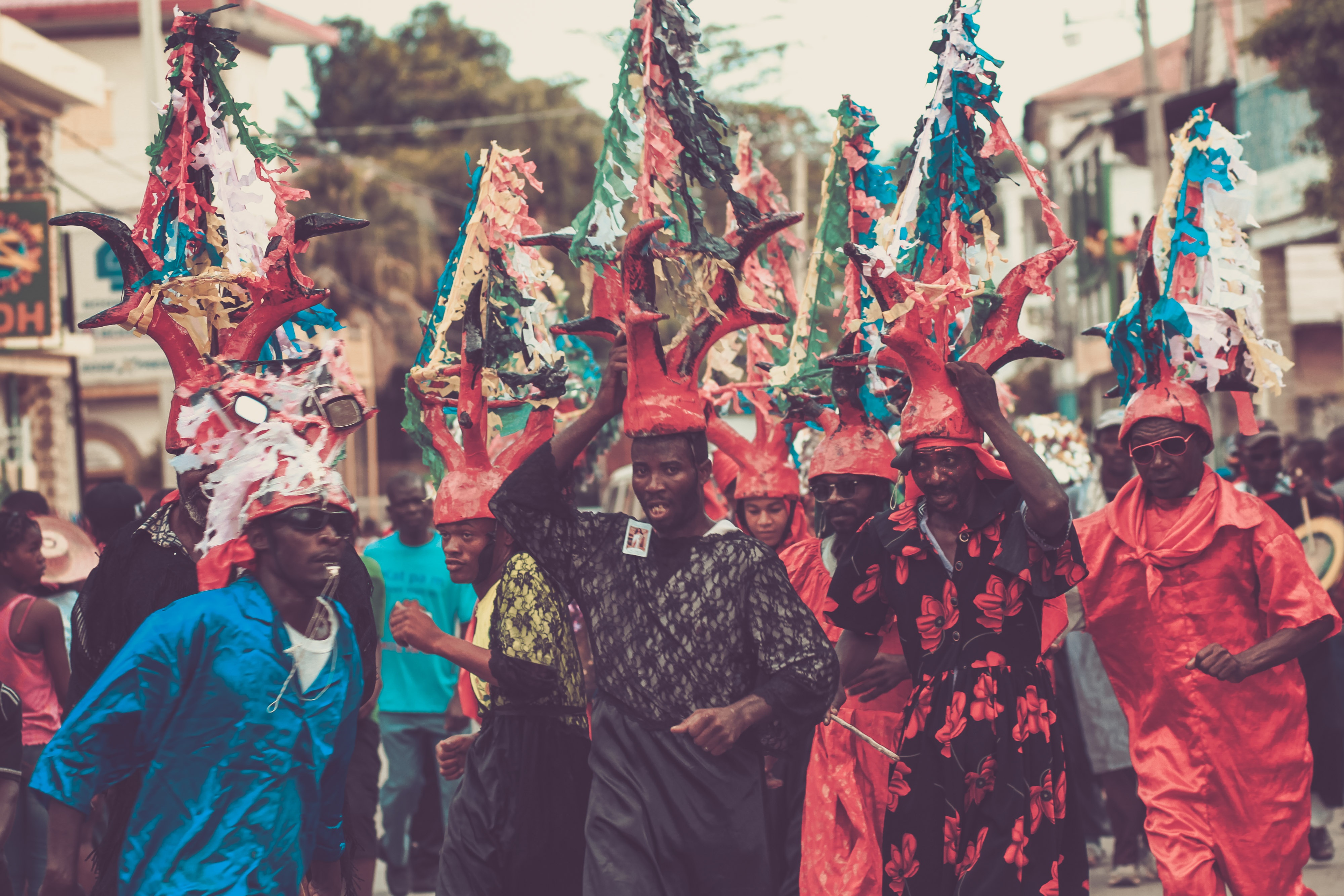
The origins of Haitian Carnival reach back to the French colonial period, when enslaved Africans observed the pre-Lent festivities of their enslavers — masked balls, feasts, and parades that marked the days before the fasting season. But the enslaved population did not simply imitate what they saw. They layered their own traditions onto the European framework, incorporating African masking rituals, Vodou spiritual practices, and communal music-making into the celebration. What emerged was something entirely new — a creole festival that belonged to no single tradition but drew power from many.
After independence in 1804, Carnival took on an even deeper significance. The formerly enslaved people of Haiti were now free to celebrate openly, and Kanaval became a space where the social order could be inverted, where the powerless could mock the powerful, and where collective memory could be performed in the streets. The tradition of political commentary through Carnival music — known as chan pwen, or “pointed songs” — became one of the most potent forms of free expression in Haitian public life.
The Characters of Kanaval
One of the most distinctive features of Haitian Carnival is its cast of recurring characters, each carrying layers of historical and spiritual meaning. The most fearsome is Chaloska, named after Charles Oscar Étienne, a brutal military commander from the early twentieth century who was known for terrorizing civilians. During Carnival, performers dressed as Chaloska wear military uniforms smeared with fake blood, their faces painted in grotesque exaggeration. The character transforms a real historical villain into a figure of dark comedy — by parading him through the streets as a buffoon, the community strips him of his power.
Then there are the Lansèt Kòd, revelers who cover their bodies in a thick mixture of charcoal, oil, and molasses until they are entirely black and glistening. They carry ropes — the kòd — and chase spectators through the streets, threatening to smear them with the same dark paste. The Lansèt Kòd are widely interpreted as embodying the raw, uncontainable energy of the enslaved population in revolt, their blackened bodies a proud reclamation of the skin color that colonizers used to justify oppression. To be touched by a Lansèt Kòd during Carnival is to be reminded that freedom was won through struggle, not granted as a gift.
Other beloved characters include the Zel Mathurins, performers who construct enormous butterfly wings from wire and fabric and dance through the streets in bursts of airborne grace. The Madigra wear elaborate beaded capes and ornate headdresses, while the Rara bands — who emerge more fully after Carnival ends — march with bamboo trumpets called vaksin, metal horns, and drums in hypnotic, winding processions that blur the line between celebration and spiritual ceremony.
Jacmel: The Artistic Heart of Kanaval
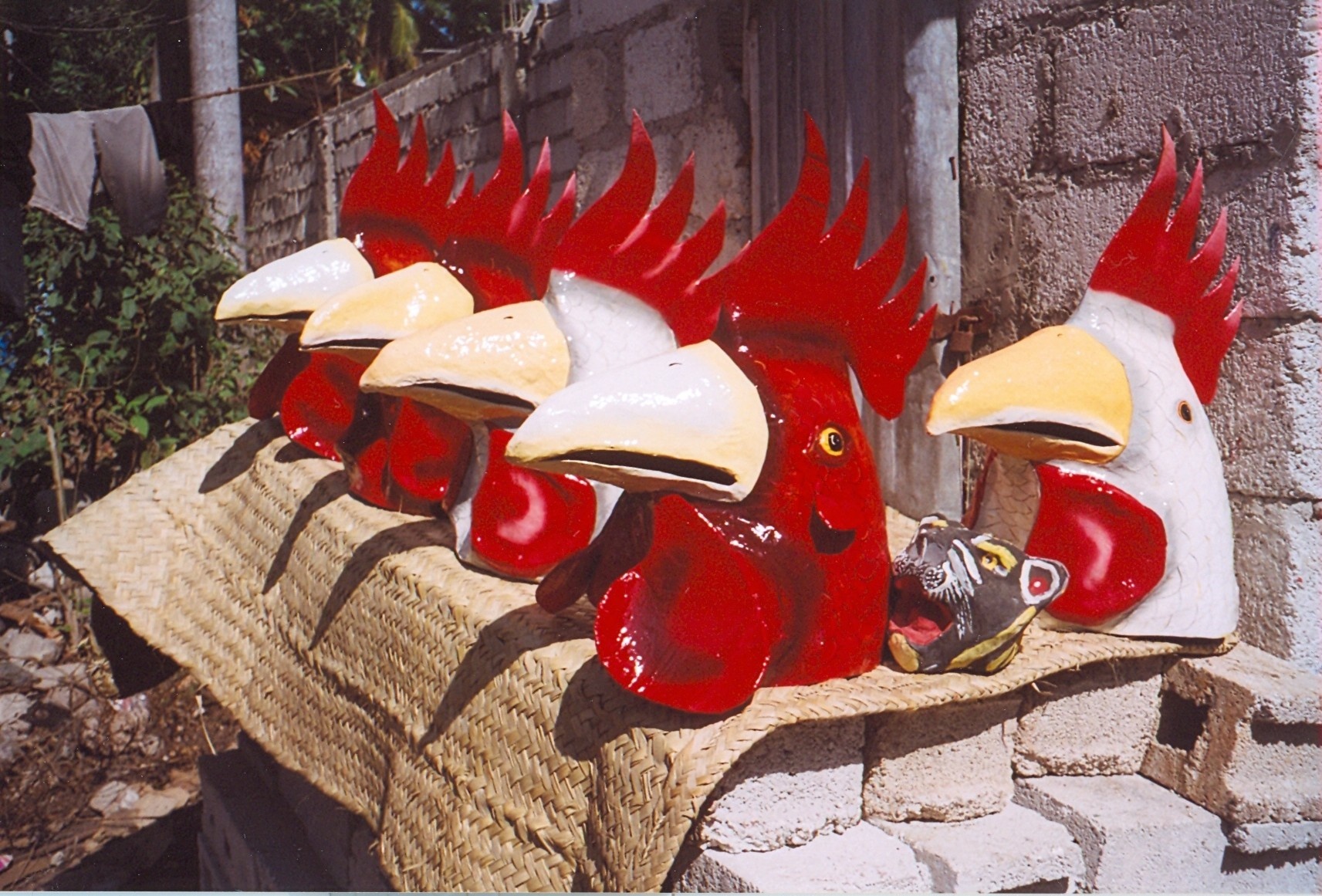
While Port-au-Prince hosts the largest and most politically charged Carnival celebrations, the southeastern coastal city of Jacmel has earned a reputation as the artistic soul of Kanaval. Jacmel’s Carnival is defined by its extraordinary papier-mâché tradition, in which artisans spend months crafting enormous sculptural masks and full-body costumes from wire, paper, and paste. The results are staggering — towering dragon heads, oversized animal masks, fantastical creatures drawn from Vodou mythology, and satirical caricatures of politicians and public figures.
The papier-mâché craft in Jacmel is a true community endeavor. Workshops throughout the city operate year-round, with master artisans training younger generations in techniques that have been refined over decades. Families often specialize in particular character types or styles, passing their expertise down through the generations. During the weeks leading up to Carnival, these workshops become hives of feverish activity, with artisans working deep into the night to complete their creations. On the day of the parade, the masks come alive — bobbing above the crowd, snapping their jaws, spreading their wings — animated by the dancers beneath them who have practiced their movements for months.
Music as Weapon and Celebration
No element of Haitian Carnival carries more power than the music. Each year, the country’s top Kompa, Mizik Rasin, and Hip-Hop Kreyòl artists release songs specifically composed for the Carnival season, and these tracks become the soundtrack of national life for weeks. But Carnival music in Haiti is never just entertainment. The tradition of chan pwen — songs that deliver sharp, often biting social and political commentary — makes Kanaval one of the few spaces where ordinary Haitians can publicly criticize those in power without fear of immediate reprisal.
During the Duvalier dictatorship, Carnival music became a coded form of resistance. Musicians embedded their critiques in metaphor, double entendre, and Kreyòl wordplay that the regime could not easily censor without revealing its own vulnerability. Even today, the most anticipated aspect of each Carnival season is which artists will release the most daring chan pwen, and whose reputations will be skewered in song. Carnival floats often feature elaborate sound systems blasting these tracks at extraordinary volume, and the crowds respond with a combination of dance, singing, and collective commentary that turns the entire street into a rolling political rally.
Survival and Resilience
Haitian Carnival has survived every crisis the nation has faced. After the devastating earthquake of January 2010, many expected that Carnival would be canceled indefinitely. Instead, it returned in 2011 — scaled down, somber in places, but unmistakably alive. For many Haitians, the decision to celebrate was not a sign of frivolity but of defiance. Kanaval declared that the spirit of the people could not be crushed, that joy itself was an act of resistance against despair.
Political instability, gang violence, and economic hardship have all threatened Carnival in recent years. Some years the celebrations have been postponed or reduced in scope. But the tradition endures because it is not imposed from above — it belongs to the people. In neighborhoods across Haiti, even when official Carnival events are canceled, communities organize their own celebrations, building their own floats, composing their own songs, and dancing through their own streets. Kanaval does not wait for permission.
Haitian Carnival is more than a party — it is a declaration. Every mask crafted in a Jacmel workshop, every chan pwen that names the unnamed, every Lansèt Kòd who chases a stranger through the crowd carries forward a tradition of resistance, creativity, and communal joy that has defined Haiti since its founding. At HaitiPAM, we celebrate Kanaval as one of the most powerful expressions of Haitian identity — a reminder that a people who danced their way out of slavery will never stop dancing.
 HAITI PAM
Leave a comment