There is a rhythm that lives in the blood of every Haitian, whether they were born in the hills above Port-au-Prince or in a walk-up apartment in Brooklyn. It pulses through summer block parties in Little Haiti, Miami, and fills dance halls from Montréal to Paris. It is kompa — sometimes spelled compas or konpa — and for more than seven decades, it has been the undeniable heartbeat of Haitian music. To hear kompa is to feel Haiti itself: joyful, resilient, impossible to keep still.
A Revolution Born on July 26, 1955
Before kompa, Haiti’s popular music scene was dominated by méringue de salon — elegant, orchestral dance music influenced by European traditions. It was beautiful, but it belonged to the ballroom. Nemours Jean-Baptiste, a saxophonist and bandleader born in Port-au-Prince in 1918, heard something different in the air. He listened to the Dominican merengue crossing the border, felt the swing of Cuban son and American jazz drifting through Caribbean radio waves, and sensed that Haiti needed a modern sound of its own.
On July 26, 1955, Jean-Baptiste and his Ensemble aux Callebasses took the stage in Port-au-Prince and unveiled what he called “compas direct” — a simplified, driving rhythm built around electric guitars, a strong brass section, and a beat that grabbed you by the hips and refused to let go. The date has since been celebrated as the birthday of konpa. Jean-Baptiste had taken the sophistication of méringue and fused it with something raw and irresistible, creating a groove that was uniquely, unmistakably Haitian.
The rivalry that followed between Jean-Baptiste and fellow bandleader Webert Sicot — whose kadans style offered a jazzy counterpoint — only fueled kompa’s rise. Fans chose sides passionately, and the competition pushed both musicians to innovate relentlessly. By the early 1960s, kompa had conquered Haiti’s airwaves and dance floors, becoming the soundtrack to a nation finding its modern voice.
The Golden Era: Mini-Jazz and the 1970s Explosion
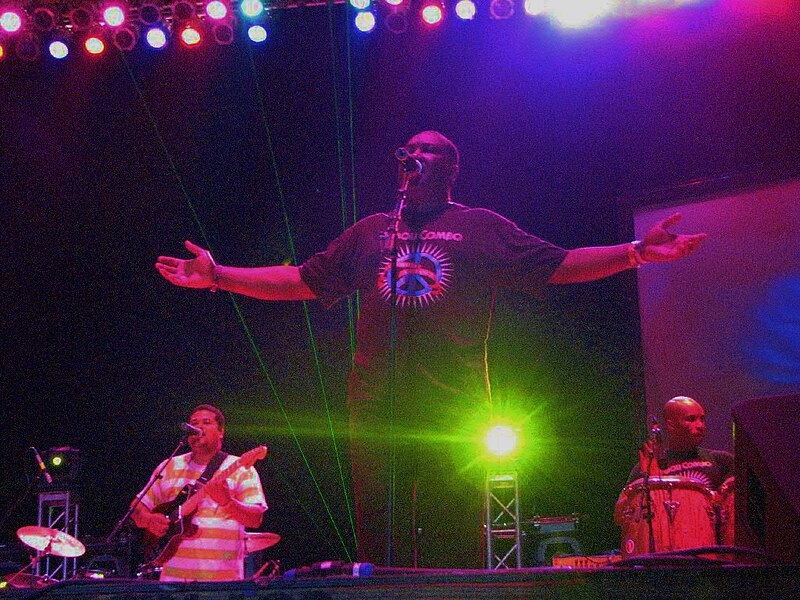
The late 1960s brought a seismic shift. A generation of young Haitian musicians, inspired by rock and roll and the global counterculture, formed small combos known as “mini-jazz” bands. Groups like Les Shleu-Shleu, Les Ambassadeurs, Tabou Combo, and Les Fantaisistes de Carrefour stripped kompa down to its essentials — electric guitars, bass, drums, and keyboards — and injected it with youthful energy and experimentation. The mini-jazz movement democratized the genre, making it accessible to any group of friends with instruments and a dream.
Among these bands, Tabou Combo would rise to international prominence. Formed in Pétion-Ville in 1968, Tabou Combo moved to New York City and became ambassadors of Haitian music to the world. Their fusion of kompa with funk, rock, and soul created a sound that could fill stadiums from Madison Square Garden to the Olympia in Paris. For diaspora Haitians scattered across North America and Europe, a Tabou Combo concert was more than entertainment — it was a homecoming.
The 1970s and 1980s saw kompa evolve into what many call its golden age. Bands like Skah Shah, D.P. Express, Magnum Band, and System Band pushed the boundaries of the genre, incorporating synthesizers and sophisticated arrangements while keeping the essential groove intact. Kompa became the main popular music not only in Haiti but across Dominica, Guadeloupe, Martinique, and the wider French Caribbean, where it merged with local traditions to create vibrant new subgenres like zouk.
Nouvel Jenerasyon: The New Generation Takes Over
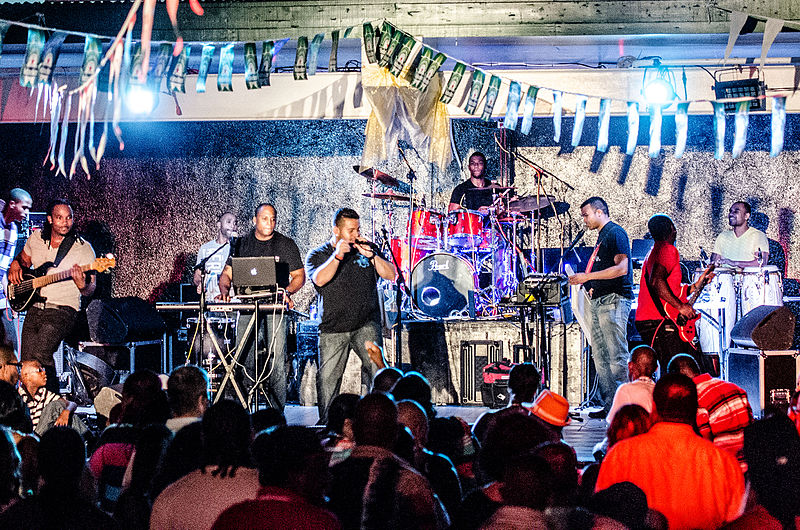
By the 1990s, a new wave was cresting. Michel Martelly, known by his explosive stage name Sweet Micky, turned kompa concerts into theatrical spectacles, merging the music with outrageous showmanship and digital production. His embrace of synthesizers and drum machines over traditional brass signaled a new direction — kompa was going digital, and the younger generation was hungry for it. Martelly would later become Haiti’s president in 2011, proof that in Haiti, music and politics have always danced together.
The 2000s and 2010s brought bands like Carimi, T-Vice, Harmonik, and Klass to the forefront. These groups, many of them based in the diaspora, crafted a polished, contemporary sound that could compete on global playlists while still making any Haitian grandmother nod in approval. Carimi, formed by three Haitian-Americans in New York, became one of the most successful kompa acts of their era, proving that the genre could thrive far from Port-au-Prince while remaining rooted in its traditions.
Today, a new generation of artists continues to push kompa forward. Producers blend the classic kompa groove with hip-hop beats, EDM drops, and R&B harmonies, creating hybrid sounds that resonate with young listeners worldwide. Yet the core remains — that slow, swaying, hypnotic rhythm that makes couples pull each other close on the dance floor, the tanbou heartbeat that has been pulsing since 1955.
More Than Music: Kompa as Cultural Identity
Kompa has always been more than entertainment. For Haitians in the diaspora — scattered across Miami, New York, Boston, Montréal, Paris, and beyond — kompa is a lifeline to home. It is the music that plays at baptisms and weddings, at family reunions and community festivals. When a kompa song fills the room, every Haitian present shares the same unspoken understanding: this is who we are.
The genre’s cultural significance received its highest international recognition in 2025, when UNESCO inscribed kompa as intangible cultural heritage. The designation acknowledged what Haitians have always known — that this music is not merely a style or a trend, but a living tradition that carries the soul of a people. From the porch radios of Jacmel to the festival stages of Montréal, kompa connects generations and geographies, a rhythmic thread woven through the fabric of Haitian life.
The Beat Goes On
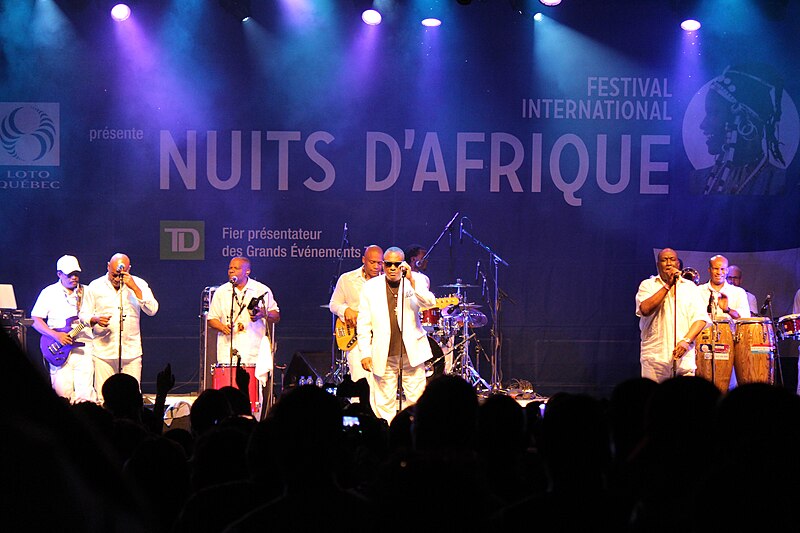
Nemours Jean-Baptiste passed away in 1985, but the revolution he started shows no signs of slowing. Kompa has survived dictatorships, earthquakes, political upheaval, and the relentless pace of musical change. It has absorbed influences from every genre it has encountered — funk, zouk, hip-hop, reggaeton — and emerged each time more vibrant than before. Haitian musicians continue to tour the globe, filling concert halls and festival grounds, introducing new audiences to the groove that started on a stage in Port-au-Prince more than seventy years ago.
If you have never heard kompa, seek it out. Start with the classic recordings of Nemours Jean-Baptiste, feel the explosive energy of Tabou Combo, sway to the smooth arrangements of Harmonik or Klass. Let the tanbou find your pulse. Because once kompa gets into your blood, it never leaves — and you will understand why an entire nation calls it the heartbeat of Haiti.
At HaitiPAM, we believe that understanding Haiti’s music is essential to understanding Haiti itself. Kompa is more than a genre — it is a declaration of joy, resilience, and cultural pride that echoes from the mountains of Kenscoff to the streets of Brooklyn. Every beat tells a story, and every story reminds us that Haiti’s creative spirit is unstoppable.
 HAITI PAM
Leave a comment